Ranger Diaries: Winter in the Hopetoun Grounds
By: Emma Parker
The first week back at work in the New Year is always an exciting time. After the festive rush, there’s something very special about walking the Grounds in near solitude: spotting the first snowdrops pushing through the cold soil, listening to the birds, and finally taking stock of the jobs, I put off at the end of last year — or those that have been on the list forever but I’ve not quite got round to yet. With Scotland experiencing a prolonged spell of cold, crisp weather, the winter landscape has been particularly rewarding to explore.

This year has been more exciting than usual, as I spotted a frost flower. “Frost flowers are thin layers of ice that are extruded through slits from the stems of plants… Their formation requires freezing air temperatures, soil that is moist but not frozen, and a plant stem that has not previously frozen. The water in the stem is drawn upward by capillary action from the ground, expands as it freezes, splits the stem, and freezes on contact with the air… No two frost flowers are alike, and they are fragile, lasting only until they sublimate or melt.”
I was delighted to find two frost flowers on the stems of thistles in the Grounds — a reminder that even in the depths of winter, there is still so much to notice if you slow down and look closely.
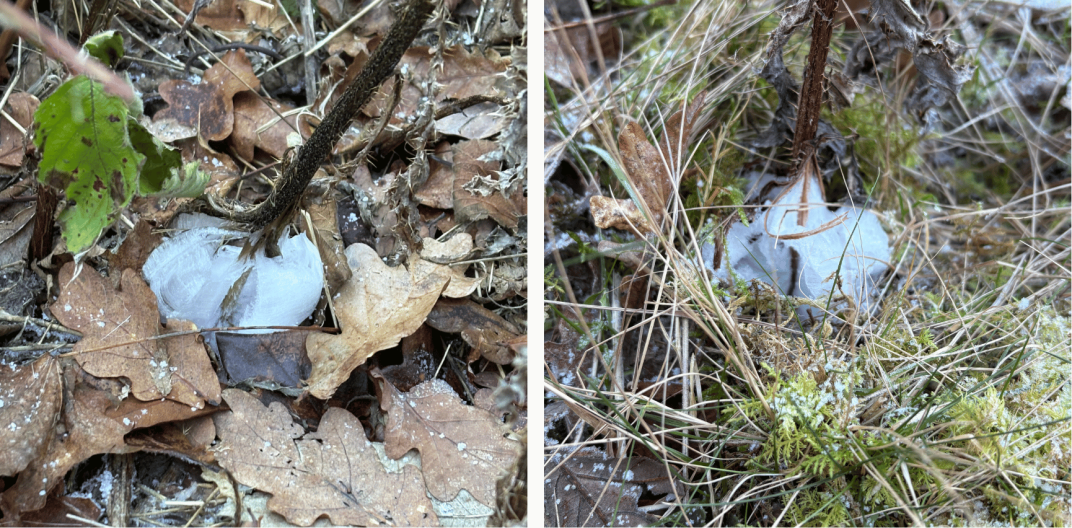
Those of you familiar with wintery spectacles may be wondering about the similarity between frost flowers and hair ice. Hair ice is also extremely rare and forms only under very specific conditions.
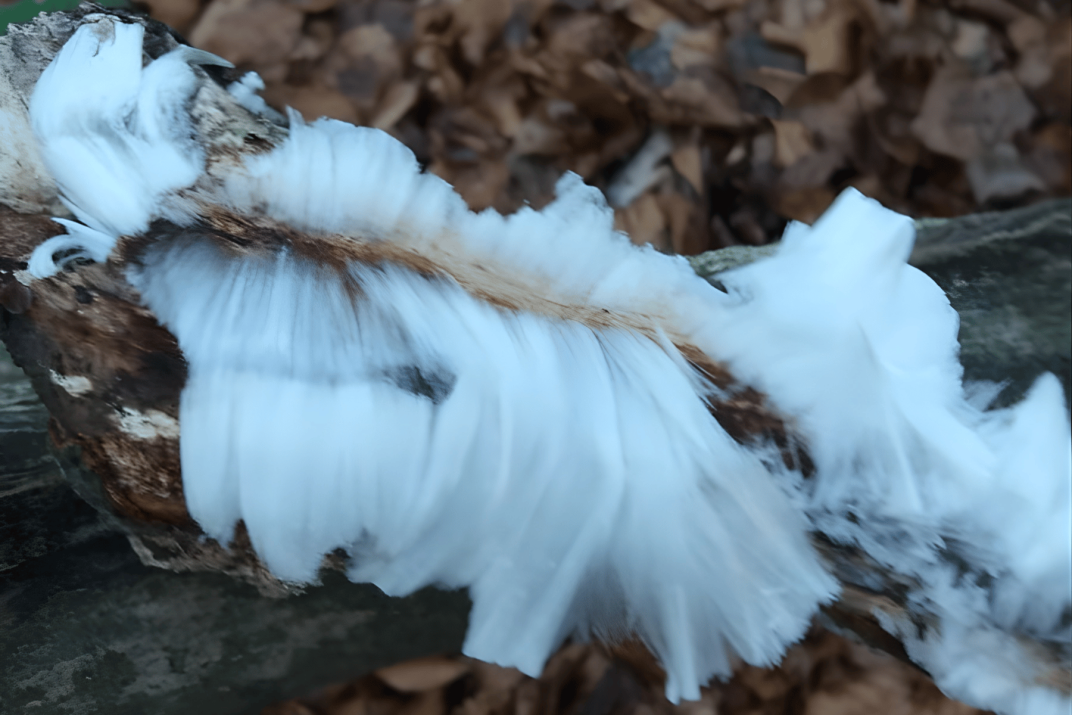
Hair ice was first recorded in 1918 by Alfred Wegener, who is better known for discovering continental drift. He proposed that a specific fungus must be responsible for the smooth, silky, hair-thin strands of ice — and he was right; but it wasn’t until 2015 that scientists confirmed Exidiopsis effusa as the cause.
The extremely specific conditions required for hair ice include moist, rotting broadleaf wood, humid air, and temperatures just below 0°C. It is mostly confined to latitudes between 45°N and 55°N, which makes sightings in Scotland particularly special.
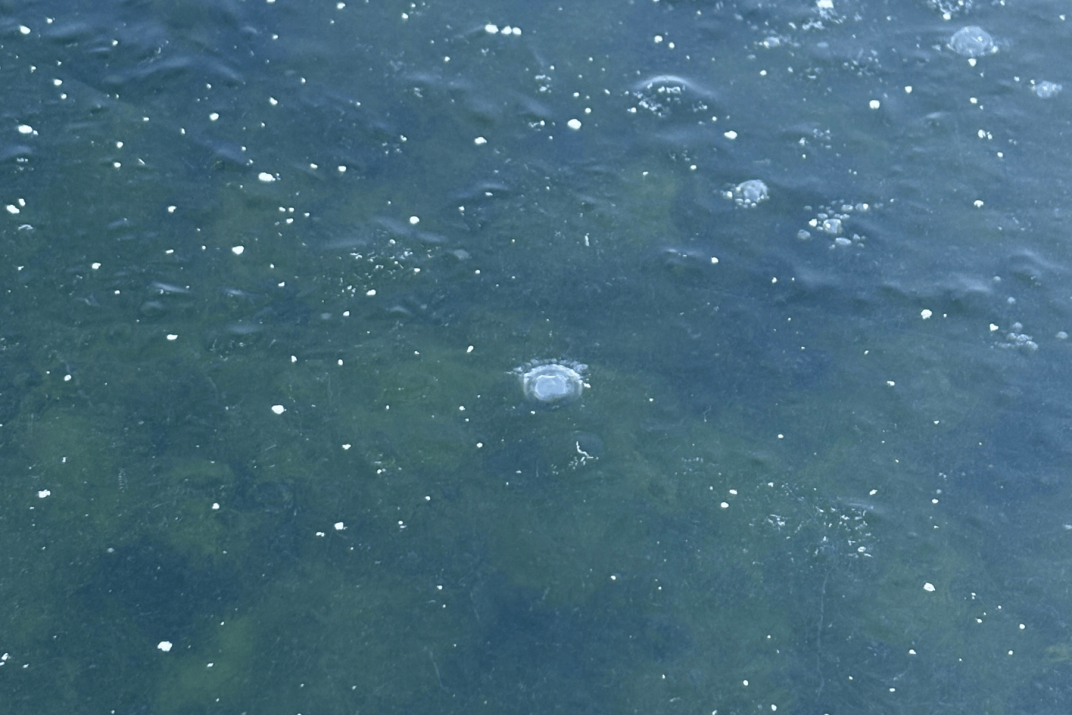
Another striking effect of this cold spell has been the ice on the pond. From the bubbles suspended beneath the surface, it looks to be a good 7–10cm thick! For now, it remains a beautiful reminder of how winter transforms the landscape, even in the quietest corners of the Grounds.
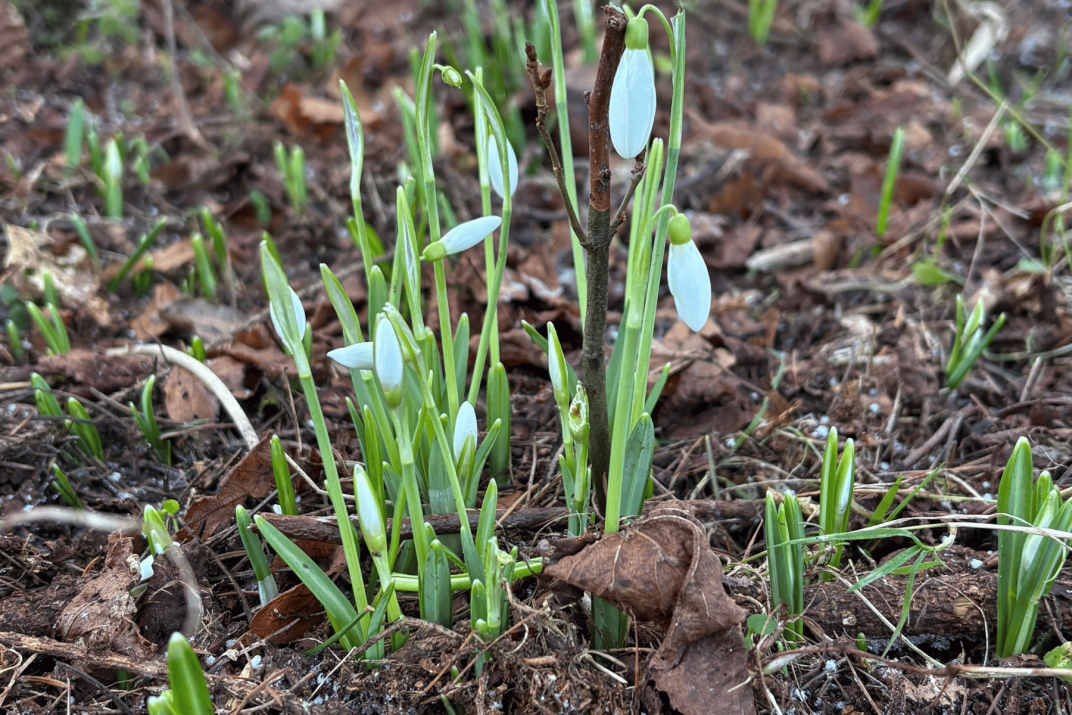
As the days slowly lengthen, we do have a milder forecast for next week, 7°C anyone? This is good news for the snowdrops, which do need a certain amount of warmth in the soil for their enzymatic reactions. Though, as woodland plants they predominantly flower early to take advantage of the sun rather than being shaded out by the trees’ leaves later on. With climate change affecting all things nature, it makes it far more difficult planning specific events in advance as you never know quite what will bloom / arrive / spawn when!
The delicate snowdrop blooms are a gentle reminder that we are half way to spring. We’ll soon be welcoming visitors to enjoy a special moment in the seasonal calendar as part of the Scottish Snowdrop Festival. Keep an eye on our website and social channels for booking details and further information. I look forward to sharing the Grounds with you very soon.

Categories: Hopetoun Grounds Hopetoun House







 Due to Midhope Castle's location on a private part of our Estate we often have to prohibit access to visitors due to filming, farming operations, estate activities or large public events in the surrounding area.